

You are using an out of date browser. It may not display this or other websites correctly.
You should upgrade or use an alternative browser.
You should upgrade or use an alternative browser.
Taxus brevifolia (pacific yew)
- Thread starter Cruiser
- Start date


pandacular
Masterpiece
Huh, I had no idea we had a native yew species.

BrightsideB
Omono
May be the other side of the Pacific.Huh, I had no idea we had a native yew species.
BrightsideB
Omono
Just looked it up and it’s North American.
Cruiser
Omono
They're not very common. Every now and then you may notice one in the forest, then not see any others the rest of the day.Huh, I had no idea we had a native yew species.
Our most shade tolerant tree. 99% of the time they’re in the understory. Usually in older and wet forests. They layer extremely well, which helps them to spread vegetatively. They take forever to grow. 30’ is tall. 12” diameter is a considerable trunk size. Most trees take well over 100 years to get that big. I had an 8 incher that was 117yrs.
Most people mistake them for western hemlock which is also often found in the understory. But yew has sparser foliage and new stems are green for the first couple years.
The trees have medicinal properties that are linked to cancer drugs, but eating most parts of it can kill a person.
The wood is very strong and resists rot. It is a choice wood for crafted bows. Since the trees take forever to grow and usually are not straight it fetches a high price.
Great trees.
Last edited:
BrightsideB
Omono
Very cool! Thanks for that info. I didn’t know there was a native to North America either.They're not very common. Every now and then you may notice one in the forest, then not see any others the rest of the day.
Our most shade tolerant tree. 99% of the time they’re in the understory. Usually in older and wet forests. They layer extremely well, which helps them to spread vegetatively. They take forever to grow. 30’ is tall. 12” diameter is a considerable trunk size. Most trees take well over 100 years to get that big. I had an 8 incher that was 117yrs.
Most people mistake them for western hemlock which is also often found in the understory. But yew has sparser foliage and new stems are green for the first couple years.
The trees have medicinal properties that are linked to cancer drugs, but eating most parts of it can kill a person.
The wood is very strong and resists rot. It is a choice wood for crafted bows. Since the trees take forever to grow and usually are not straight it fetches a high price.
Great trees.
pandacular
Masterpiece
Have you found any large ones for collection? i.e., do they gain the traits we generally look for in yamadori?
I ask because so many of the great yews in Europe are from hedging or other human cultivation rather than collected from the wild.
I ask because so many of the great yews in Europe are from hedging or other human cultivation rather than collected from the wild.

rusticana
Mame
They have evidence that armies in europe had suitable ancient yew trees they harvested boughs for bows every few decades. Very stong an resilient wood. So rare to find or detect one in the wild in the PNWHave you found any large ones for collection? i.e., do they gain the traits we generally look for in yamadori?
I ask because so many of the great yews in Europe are from hedging or other human cultivation rather than collected from the wild.
Cruiser
Omono
Yes I’ve found some big trunks but they often come attached to larger trees, not compacted ones.Have you found any large ones for collection? i.e., do they gain the traits we generally look for in yamadori?
I ask because so many of the great yews in Europe are from hedging or other human cultivation rather than collected from the wild.
Though I have seen some nice yamadori material it’s uncommon due to where yew typically grow around here. They are sensitive to high heat and other extremes so they’re not usually found in the open.
In the understory they are sheltered from the constant barrage that shapes stunted trees in more hostile locations.
Additionally, growing in shade promotes a spreading habit and leggy branches.
The good news is that yew backbuds like crazy. So if a nice trunk is found, it can be chopped and dug, and then can sprout new growth to work with.
Last edited:

Mike Westervelt
Chumono
Foliage is way darker than Western Hemlock, bark is usually red like cleaned shimpaku, and they grow fencepost strait, they are fairly uncommon but once you see
one they become instantly recognizable even from a distance.
Also the trunks get a little muscly/ridged albeit taper less.
one they become instantly recognizable even from a distance.
Also the trunks get a little muscly/ridged albeit taper less.

Orion_metalhead
Masterpiece
After some growth, I wonder if they will strike cuttings easily like other yews.
The characteristics sound like they would be a great species for bonsai.
The characteristics sound like they would be a great species for bonsai.
Cruiser
Omono
I have not tried taking cuttings but according to this paper it can be done.After some growth, I wonder if they will strike cuttings easily like other yews.
The characteristics sound like they would be a great species for bonsai.
It mentions Autumn being a good time to take them.
Cruiser
Omono


Deep Sea Diver
Imperial Masterpiece
We grew some taxis brevifolia in the Environmental Center for years.
When logging areas were clear cut many yews stood out as their foliage basically yellowed up and slowed growth until a partial canopy was restored.
They were really slow growers in their natural habitat. Wonder what they will do in bonsai media.?
Collected taxonomical samples in the forests around Steven’s Pass for a couple decades. Every once in awhile we’d come onto these yews which were spread out for 20 yards from a large plant. After some probing, it was discovered these were all basically one plant that had ground layered multiple times. Looked like the snow pack pressed the growth onto the forest floor. Coupled with the usual detritus and fallen branches through many years, these areas had ground layered over and over again…. Literally spreading the plant sideways.
So thinking ground layering would work.
Cheers
DSD sends
When logging areas were clear cut many yews stood out as their foliage basically yellowed up and slowed growth until a partial canopy was restored.
They were really slow growers in their natural habitat. Wonder what they will do in bonsai media.?
Collected taxonomical samples in the forests around Steven’s Pass for a couple decades. Every once in awhile we’d come onto these yews which were spread out for 20 yards from a large plant. After some probing, it was discovered these were all basically one plant that had ground layered multiple times. Looked like the snow pack pressed the growth onto the forest floor. Coupled with the usual detritus and fallen branches through many years, these areas had ground layered over and over again…. Literally spreading the plant sideways.
So thinking ground layering would work.
Cheers
DSD sends

Nice looking tree.This tree had a strong growing season.
View attachment 567293
It could be turned into a nice raft.
View attachment 567294
View attachment 567295
Increased light has lead to morphological changes in the needles. They are not as dark or flatly-arranged as shaded needles.
View attachment 567297
Big Pacific yew are quite rare because of harvesting for taxol. I got a great yamadori the other day and will post pics soon.
Taxus brevifolia (Pacific yew) description
Description of the evolution, biology, distribution, ecology, and uses of Taxus brevifolia (Pacific yew).
www.conifers.org
Cruiser
Omono
Another brevifolia in the collection.
4” trunk.
Cut 1.4” diameter branch contains 50 rings.

A good amount of roots were obtained.


4” trunk.
Cut 1.4” diameter branch contains 50 rings.
A good amount of roots were obtained.
Cruiser
Omono
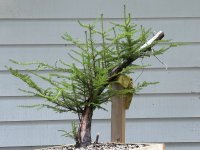
Upright pacific yew. Collected October 2024.
Growing on the edge of a bald. Open exposure, yet sheltered.

Potted into bark-pumice. Placed in shade.

August 2025
Recovery on track. No problems.

Because the tree was kept in shade, needles grew in a flat plane. Contrast with last seasons growth in more sun.
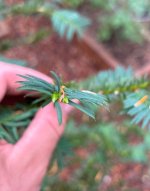

New growth emerging along trunk.
Roots. Delicate white strands.

Haircut. To bring the canopy into better proportion and encourage more inner growth.

Growing on the edge of a bald. Open exposure, yet sheltered.
Potted into bark-pumice. Placed in shade.
August 2025
Recovery on track. No problems.
Because the tree was kept in shade, needles grew in a flat plane. Contrast with last seasons growth in more sun.
New growth emerging along trunk.
Roots. Delicate white strands.
Haircut. To bring the canopy into better proportion and encourage more inner growth.
Deep Sea Diver
Imperial Masterpiece
Love to see these slow growing shade loving dual mycorrhizal using trees back budding and otherwise thriving! Well done!
Makes me want to get a one as I’ve always liked these guys.
Can I ask much sun are you giving this tree and which media is it in?
Happy New Years!
DSD sends
Makes me want to get a one as I’ve always liked these guys.
Can I ask much sun are you giving this tree and which media is it in?
Happy New Years!
DSD sends
Cruiser
Omono
Love to see these slow growing shade loving dual mycorrhizal using trees back budding and otherwise thriving! Well done!
Makes me want to get a one as I’ve always liked these guys.
Can I ask much sun are you giving this tree and which media is it in?
Happy New Years!
DSD sends
Placement is mostly shade with a bit of open sky directly overhead. Dappled light in the afternoon becomes short stints of direct, yet low westerly rays at days end in the height of summer.
The tree is directly up against the west wall of a white shed, which may help refract a little light. Just south of it is another shed and tree line that blocks most light. Just west of it are large Douglas-firs and understory brush that provide additional shelter and allow dappled light to come through.
I’m going to move it into a sunnier location for this coming grow season. Still shaded but more light that it gets now. Other yews have done great in bright shade beneath a cedar canopy that gets direct rays only in winter.
Collected yews I’ve placed in more sun did poorly. Probably because of underdeveloped root systems and not enough time was given to adapt to increased light conditions.
Substrate for the upright yew is sifted DF bark and pumice. 50-50 I think. Last summer it was watered frequently, even when soil was already wet.
Similar threads


- Replies
- 4
- Views
- 198

