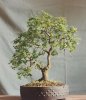
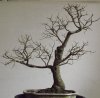
… the trees woke up from something that most people on forum said would most certainly kill our trees, and it seems promising
I'm with you in regards to attempting to do something the specific details of which have not been done in combination before, with careful attention to scientifically confirmed horticultural necessities, but to be fair, I think if anyone did say that refrigeration would certainly kill anyone's trees, he meant that it would result in death in the long term, not immediately, as a result of multiple years of insufficient dormancy. I apologize to the original poster, as this isn't exactly relevant to your original question, but I do want to address this issue for a moment. There certainly is a risk that the dormant conditions given during refrigeration appear to be sufficient in the short term but, in fact, are not sufficient, so it has to be done with rigorous attention to detail, I think.
a tree can survive for two years without proper dormancy soo if it never recives a proper dormancy in the three year span it would be dead. soo conclusions could be drawn at the 3 year mark
That's actually fuzzy logic. The statement is one regarding the observation that a tree can survive for two years, because, up to this point, that length of time has been confirmed, and then indefinite dormancy / death ensues. The statement is not that a tree can survive for two years
and absolutely only two years before death ensues. This means that up to this point, we do not know whether a tree would, at some later date, experience indefinite dormancy / death if it experienced two years without proper dormancy and then continued to grow healthily for another season. What we do know is that if this happened, within the bounds of our limited knowledge, this tree would be a record breaker. This is all we can say for certain. Three years is not an absolute mark of success or failure, it is simply a span of time that has been observed to be the common impassible maximum when
blatantly improper dormancy conditions have been provided for the tree.
And yet being in the fridge is what killed it.
Again, to be fair, it was not the winter dormancy process in the fridge that killed the tree in question, but mitigating circumstances that could have been prevented if certain precautions had been taken, allowing the tree to continue to live healthily in a refrigeration-induced dormancy state. This point (“...the fridge is what killed it”), therefore, is moot.